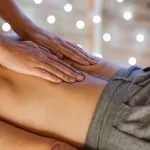
Lovely staff, amazing service... Beautiful Molly the dog sometimes greets you at reception with her big, bright eyes and calm and peaceful quiet nature.
-A.I.
I was carrying around chronic pain that I thought I would never get rid of. I’m managing to stay pain-free through the week now and I’m over the moon!
-V.S.
I am amazed and awe struck at how massages can be deeply intuitive, powerful and effective.
- S.A.
I felt safe, heard, validated and a little less alone.
-E.L.
Truly the best therapeutic and deep relaxation massage I have had. Highly recommended!
-T.A.G.
Fantastic practitioners. Gorgeous rooms. Owned & operated by a locally-living Goddess of sorts. This place is a real wellness centre!
-R.P.
Everyone who works here is full of knowledge and I love the happy vibes.
-K.R.
Hands down the best massage I’ve ever had. Have already booked in for my next one.
-M.T.
Sports Massage
Sports Massage in Carlton North, Melbourne
For Bodies That Do Quite a Lot
Maybe you run.
Lift.
Cycle.
Climb.
Play footy.
Spend your weekends doing something unnecessarily difficult up a mountain.
Or perhaps you’ve recently returned to exercise with tremendous enthusiasm and your muscles are now lodging a formal complaint.
Sports Massage is a hands-on massage treatment designed for active bodies.
It can be used when you’re dealing with muscular tightness, soreness or fatigue, during periods of heavy training, or simply when your body feels like it could use some attention after everything you’ve been asking it to do.
And despite the name, you absolutely do not need to be an athlete.
Not sure if Sports Massage is right for you? Contact our team on (03) 9347 9247.
Is Sports Massage Right for You?
Sports Massage may be a good choice if you’re looking for hands-on treatment for muscles that feel tight, tired or sore from training, sport, exercise or everyday physical activity.
People commonly book Sports Massage because they’re experiencing:
Private health insurance claiming may be available depending on the practitioner providing your treatment, the service received and your individual extras cover.
We have HICAPS available at the clinic for eligible on-the-spot claims. We recommend checking your cover directly with your health insurer before your appointment if you’re relying on a rebate.
Claim your treatment through Hicaps
Ready to Give Those Hard-Working Muscles Some Attention?
Whether you’re training for something enormous or simply trying to get through your regular week without your calves behaving like concrete, we’re here to help.
Not sure what to book? Contact our team on (03) 9347 9247.
Gift Vouchers
Gift vouchers for this treatment are available to purchase online. Buy Gift Voucher
What Is Sports Massage?
Sports Massage is a form of massage therapy focused on the muscular demands associated with sport, exercise and physical activity.
Despite the name, it isn’t one single massage technique.
Your therapist may draw on a combination of techniques depending on what you’ve been doing, how your body is feeling and what you’re hoping to get from the session.
Treatment might focus on a particular area – perhaps your calves after increasing your running distance, your shoulders after swimming or your hips after spending far too much time on a bicycle.
Or you may simply want broader treatment for a body that feels generally tight and tired.
The session will be adapted to you rather than following the same routine for every person who owns a pair of running shoes.
What Happens During a Sports Massage?
Your therapist will usually begin by asking what has brought you in.
They may want to know:
What sport or exercise you do
How frequently you’re training
Whether your training has recently changed
Where you’re experiencing tightness or soreness
Whether you’ve had a recent injury
What movements aggravate your symptoms
Whether you’re preparing for or recovering from an event
What you’d like from the session
How much pressure you prefer
Treatment can then be focused on the areas most relevant to you.
You don’t need to arrive knowing precisely which muscle is responsible.
“My left hip has been carrying on every time I run more than 8km” is perfectly adequate information to begin with.
What Techniques Are Used in Sports Massage?
Sports Massage may incorporate a range of hands-on techniques.
Exactly what your therapist uses will depend on your body, preferences and reason for booking.
Massage and Soft-Tissue Techniques
Your therapist may use different massage techniques to work with areas of muscular tightness, soreness or sensitivity.
Treatment can be focused on a specific muscle group or several areas depending on what you need.
Myofascial Techniques
Fascia is connective tissue that surrounds and connects structures throughout the body.
Some massage therapists incorporate myofascial techniques into treatment, using sustained or directional pressure through the skin and underlying tissues.
These techniques may be used alongside other forms of massage rather than treating fascia as the mysterious explanation for every ache your body has ever produced.
Trigger-Point Techniques
Your therapist may work with particularly sensitive areas within muscles using sustained or gradually adjusted pressure.
Sometimes these areas reproduce familiar discomfort.
Pressure will always be adjusted according to your comfort and response.
Stretching and Movement
Your therapist may incorporate gentle stretching or movement into your appointment where appropriate.
This can be particularly useful when you’re feeling stiff after training or when a particular movement feels restricted.
Again, the goal isn’t to make you infinitely flexible.
It’s to help your body feel comfortable doing the things you actually want it to do.
Sports Massage for Training and Recovery
Training places stress on the body.
That’s not necessarily a bad thing.
It’s actually rather important if you want to become stronger, faster or more physically capable.
But harder or unfamiliar exercise can also leave you feeling sore, stiff and tired.
Sports Massage is commonly used by active people as part of their recovery routine, particularly during periods of heavier training or after demanding events.
But it is not a substitute for the boring things your body also requires:
Adequate recovery
Sleep
Nutrition
Hydration
Sensible training progression
Rest when you genuinely need it
Unfortunately, no massage therapist can negotiate your way out of sleeping five hours a night while training for a marathon.
Sports Massage Before an Event
Some athletes choose massage before competition or sporting events.
Pre-event massage is generally different from having an enormous deep-tissue session the day before you race.
Timing, pressure and treatment style matter.
If you have an important event coming up, tell your therapist.
They can adjust the session according to what you’re preparing for and how close you are to the event.
And if you’ve never had Sports Massage before, the evening before your first marathon probably isn’t the ideal moment to discover how your body responds to a very firm treatment.
Sports Massage After an Event
After a demanding event, you may be feeling sore, tired and generally quite aware that you possess muscles.
Your therapist can adjust pressure and treatment according to how your body is feeling rather than assuming that freshly exhausted muscles need to be aggressively attacked.
Sometimes your body has already done enough for one day.
And somewhere around kilometre 17, quite possibly every muscle in your body knows this.
Runners may seek Sports Massage for areas such as:
Calves
Hamstrings
Quadriceps
Glutes
Hips
Lower back
Massage may be incorporated into a broader recovery routine during training or after events.
If you’re experiencing persistent pain, recurrent injury or symptoms that appear every time you reach a particular training load, however, you may benefit from a more detailed musculoskeletal assessment rather than simply repeatedly massaging the sore area.
In that situation, Myotherapy may be a more appropriate starting point.
Sports Massage is particularly focused on the demands of exercise, training and physical activity.
Remedial Massage may be used more broadly for muscular pain, tension and discomfort whether or not sport is involved.
In practice, the distinction can sometimes be less important than finding a suitably qualified therapist whose treatment style matches what you’re looking for.
Contact our team on (03) 9347 9247 and tell us what’s happening. We’ll help you choose.
How Firm Is a Sports Massage?
As firm as is appropriate for you.
Sports Massage is often associated with deeper pressure, but “sports” does not mean your therapist needs to attempt to push you through the treatment table.
Some people love firm massage.
Others don’t.
And some areas of your body may tolerate pressure very differently from others.
Tell your therapist what feels good, what doesn’t and what you’re comfortable with.
More pain does not automatically equal a better treatment.
Will I Be Sore After a Sports Massage?
You may experience some temporary tenderness after a firm massage, particularly if an area was already sensitive.
But being unable to walk down the stairs afterwards is not evidence that your therapist “really got in there.”
If you have an important sporting event or heavy training session coming up, let your therapist know so they can take that into account when planning your treatment.
What Should I Wear?
Wear whatever is comfortable.
Depending on the area being treated, you may be asked to remove some clothing, but your therapist will explain what is needed and use appropriate draping throughout your appointment.
Your comfort and consent matter.
If you’d prefer to remain more covered, tell your therapist.
Can I Claim Sports Massage on Private Health Insurance?
Potentially.
Private health claiming depends on the type of service provided, the qualifications and provider status of the practitioner you see, and your individual extras policy.
We have HICAPS available at the clinic for eligible on-the-spot claims.
Because policies vary, we recommend checking with your health insurer before booking if receiving a rebate is important to you.
When Should I See Someone Else?
Massage is appropriate for many forms of ordinary muscular soreness and tension.
But some symptoms require assessment rather than a firmer massage.
Seek appropriate healthcare if you have:
Significant pain following a serious injury
Suspected fracture or dislocation
Severe or rapidly worsening pain
Significant swelling following an injury
New or unexplained weakness or numbness
Chest pain or difficulty breathing
Fever or significant illness accompanying pain
A hot, swollen or unusually painful calf
Symptoms that simply don’t make sense as muscular soreness
If you’re unsure, contact our team on (03) 9347 9247 before booking.
Frequently Asked Questions About Sports Massage
Is Sports Massage only for athletes?
No.
Sports Massage can suit anyone looking for targeted massage for muscles that are tight, tired or sore from exercise or physical activity.
You don’t need to compete in anything.
Is Sports Massage the same as deep-tissue massage?
Not exactly.
Sports Massage often uses firm or targeted techniques, but the treatment should be adapted to the individual.
The goal isn’t simply to use as much pressure as humanly possible.
Should I have Sports Massage before or after exercise?
Either may be appropriate depending on why you’re booking, the type of exercise you’re doing and how close you are to an event.
Tell your therapist about your training schedule so they can adapt your treatment accordingly.
Recovery also depends heavily on factors such as sleep, nutrition, hydration, rest and appropriate training load.
Massage is one tool, not a magical recovery cheat code.
Can Sports Massage prevent injuries?
We don’t claim that Sports Massage prevents injuries.
Injury risk is influenced by many factors.
Massage can be one part of looking after your body during training, but it can’t guarantee that an injury won’t occur.
Can Sports Massage treat an injury?
Sometimes massage may form part of injury management.
However, persistent, recurrent or significant injuries may require assessment, rehabilitation or medical care.
If you’re unsure whether Sports Massage is appropriate, contact our team on (03) 9347 9247.
Is Sports Massage painful?
It doesn’t need to be.
Sports Massage can be firm, but pressure should always be adapted to your preferences and comfort.
You are allowed to ask for more pressure.
You are also allowed to ask your therapist to back off.
How often should I have a Sports Massage?
There is no universally correct schedule.
Some people book occasionally when they’re particularly sore.
Others incorporate massage into periods of heavier training.
And some simply book when their body tells them it would very much appreciate someone dealing with their calves.
Frequency should depend on what you find useful rather than an arbitrary treatment schedule.
Should I book Sports Massage or Myotherapy?
If you mainly want targeted hands-on treatment for tight or tired muscles, Sports Massage may be a great fit.
If you have a persistent injury, recurring pain or movement problem and want a more detailed assessment and rehabilitation approach, consider Myotherapy.
If you’re still unsure, contact our team on (03) 9347 9247 and we’ll help you choose.
Sports Massage in Carlton North, Melbourne
You don’t have to be training for the Olympics to have muscles that need some attention.
Maybe you’re preparing for a marathon.
Maybe you’re lifting heavier.
Maybe you’ve started running again.
Maybe you’ve spent the weekend hiking.
Or maybe your definition of “sport” currently involves carrying groceries and occasionally making it to Pilates.
It all counts.
At The Urban Alchemist in Carlton North, Sports Massage provides targeted hands-on treatment for active people looking to work with muscular tightness, soreness and the physical demands of training and exercise.
We’re conveniently located for people looking for Sports Massage in Carlton North, Fitzroy, Fitzroy North, Brunswick East, Northcote, Collingwood and Melbourne’s inner north.